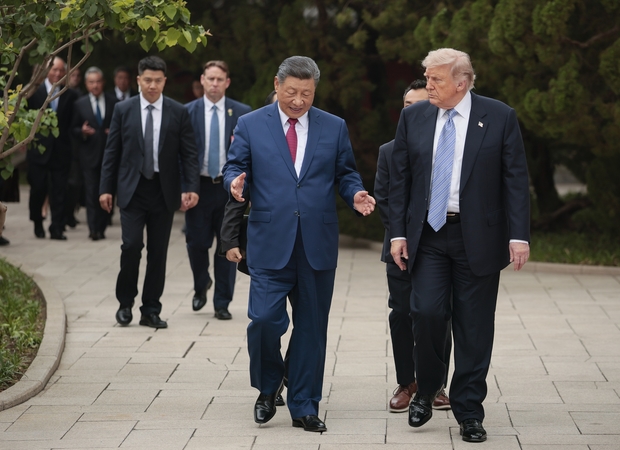
On September 24, Chinese President Xi Jinping will meet U.S. President Donald Trump at the White House, four months after Trump’s state visit to Beijing in May. That meeting produced a set of economic agreements, a new U.S.-China Board of Trade and Board of Investment, an agreement to open a government-to-government dialogue on artificial intelligence, and a commitment by the two leaders to build what both governments called a “constructive relationship of strategic stability.”
Several consequential elements of the relationship remain unsettled ahead of the September summit. The export-control truce reached in Busan on October 30, 2025—which holds both Washington’s Affiliates Rule and China’s October 9 rare-earth export-control package in abeyance—runs for one year, leaving its future uncertain. Preparations for a bilateral AI risk-and-safety dialogue are reportedly underway, although its timing, participants, and agenda remain unsettled. And, according to some analysis, Washington and Beijing construe “constructive strategic stability” quite differently. The administration has also delayed announcing the proposed $14 billion U.S. arms sale for Taiwan, despite its having received congressional pre-approval in January.
We asked a group of China and U.S.-China relations experts what observers should watch to determine what the meeting actually changes: Which decisions, mechanisms, regulatory actions, political signals—or notable absences—would reveal the direction of the relationship after the leaders leave Washington?
Global
What to Watch at the Xi-Trump Summit
No comments yet. Be the first to comment.